
UK, Germany set to join forces to boost hydrogen trade
- September 27, 2023
- Posted by: Quatro Strategies
- Categories: ESG & Renewable Energy, Europe
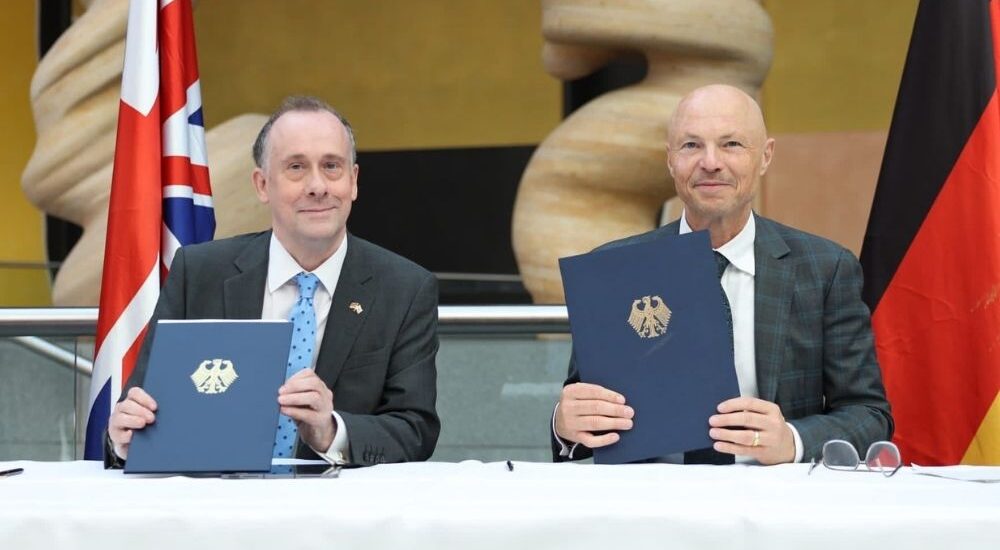
On Tuesday, the United Kingdom revealed an ambitious partnership with Germany aimed at fortifying the international trade in hydrogen. This collaboration is poised to support their net-zero targets while also strengthening energy security. The core of this partnership is to accelerate the role of low-carbon hydrogen within their respective energy portfolios.
Martin Callanan, a junior minister in the UK’s energy department, emphasized that this agreement is critical not only for the development of hydrogen as a fuel within their countries but also for its potential to transform international trade, aligning with their collective goal of achieving net-zero emissions by 2050.
The use of hydrogen is increasingly seen as a crucial tool in mitigating the environmental impacts of industries that have historically been challenging to decarbonize and in reducing the reliance on gas. However, the widespread adoption of hydrogen faces hurdles, including substantial investment requirements and technical challenges.
 In April 2022, the UK committed to doubling its hydrogen production to up to 10 gigawatts (GW) by 2030, with at least half of it coming from electrolytic hydrogen. To achieve this, the government launched a £240 million net-zero hydrogen fund to support the commercial deployment of new low-carbon hydrogen production projects throughout the 2020s.
Germany is also deeply invested in hydrogen development, planning to provide state aid for approximately 2.5 GW of electrolysis projects this year. Moreover, the German government has committed €700 million for hydrogen research to optimize production methods, showcasing its dedication to advancing hydrogen technologies.
Germany has set a domestic electrolysis capacity target of at least 10 GW by 2030, underlining its commitment to scaling up hydrogen production. This partnership between the UK and Germany exemplifies international cooperation to drive hydrogen adoption and combat climate change, heralding a sustainable and cleaner future.
QUATRO Strategies International Inc. is the leading business insights and corporate strategy company based in Toronto, Ontario. Through our unique services, we counsel our clients on their key strategic issues, leveraging our deep industry expertise and using analytical rigor to help them make informed decisions to establish a competitive edge in the marketplace.
Interested in learning more?
Sign up for Top Insights Today

Top Insights Today delivers the latest insights straight to your inbox.
You will get daily industry insights on
Oil & Gas, Rare Earths & Commodities, Mining & Metals, EVs & Battery Technology, ESG & Renewable Energy, AI & Semiconductors, Aerospace & Defense, Sanctions & Regulation, Business & Politics.
Read more insights
Port fee crossfire squeezes transpacific fleet, driving freight rates higher
China and the United States have effectively taxed each other’s ships at the pier, and the result is a shrinking pool of vessels willing, or able, to sail the world’s busiest lanes. To dodge Washington’s new levies on China-linked tonnage and Beijing’s retaliatory fees on U.S. linked ships, carriers are pulling hulls off transpacific schedules and rewriting rotations on the fly.
That whipsaw has immediate consequences: fewer eligible vessels to lift boxes or barrels into China or the U.S., longer voyage planning, and a scramble for substitutes that pushes up spot freight. The Shanghai Containerized Freight Index has already jumped as transpacific rates reset higher, while very large crude carrier (VLCC) earnings spiked when compliant ships became scarce for China-bound cargoes.

Exxon focusing on direct air capture of CO2 to reach net zero emissions
Exxon Mobil Corp, the largest U.S. oil company, is investing in technology for direct air capture (DAC) of carbon dioxide (CO2) as part of its low-carbon solutions business. The company views DAC as a critical component in achieving a net-zero future.

Canada to introduce oil and gas emissions cap framework at COP28
Canada plans to introduce a framework for its long-awaited oil and gas emissions cap during the United Nations COP28 climate summit in Dubai. The emissions cap is a key element of Canada’s commitment to reducing greenhouse gas emissions by 40-45% below 2005 levels…