
Poland takes significant step towards building first nuclear plants
- September 28, 2023
- Posted by: Quatro Strategies
- Categories: ESG & Renewable Energy, Europe, United States
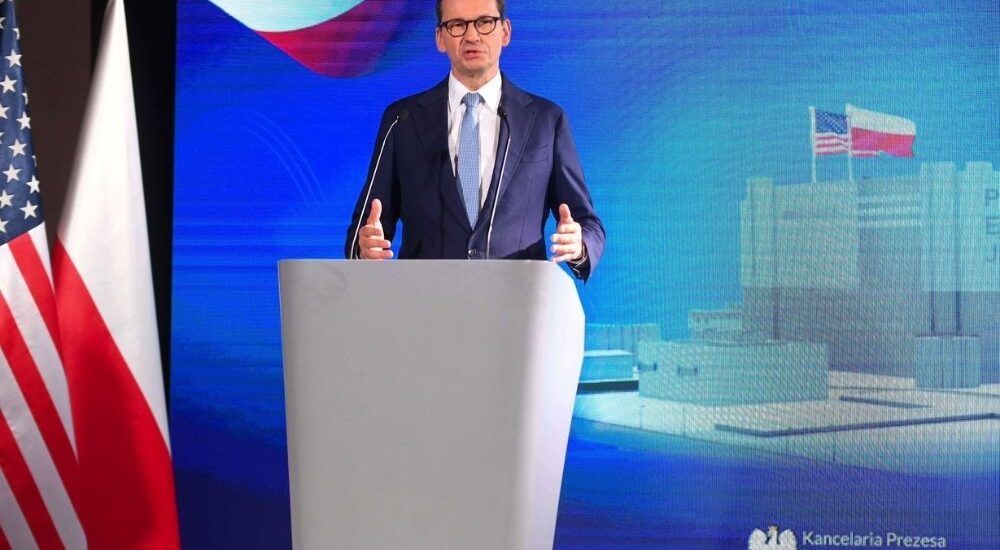
Poland took a significant step towards its first nuclear power plant with the signing of a deal between the Polish government and a consortium of U.S. companies, including Westinghouse and Bechtel. The nuclear plant, to be situated in the Pomerania region near the Baltic Sea, is a central part of Poland’s move away from fossil fuels.
The $40 billion agreement with state-owned Polskie Elektrownie Jadrowe (PEJ) involves the construction of two plants, each with three reactors. The first reactor is expected to be online by 2033, with the entire project operational within a decade after that.
Poland views nuclear energy as a crucial element of clean energy and a means to reduce dependence on Russian energy supplies.
The government believes that without nuclear energy, along with large-scale and small modular reactors (SMRs), achieving climate ambitions and ensuring energy security will be challenging.
However, the stance on nuclear energy differs within the European Union. While countries like France support nuclear energy, Germany and Spain reject the idea that it should be classified as renewable. Pro-nuclear EU member states aim to achieve 150 gigawatts of nuclear power capacity in the bloc’s electricity mix by 2050.
Currently, there are 103 reactors in 13 of the EU’s 27 member states, contributing to approximately 25% of the EU’s energy, with more than half produced in France. Only Italy and Lithuania have completed a total phase-out of nuclear power so far.
QUATRO Strategies International Inc. is the leading business insights and corporate strategy company based in Toronto, Ontario. Through our unique services, we counsel our clients on their key strategic issues, leveraging our deep industry expertise and using analytical rigor to help them make informed decisions to establish a competitive edge in the marketplace.
Interested in learning more?
Sign up for Top Insights Today

Top Insights Today delivers the latest insights straight to your inbox.
You will get daily industry insights on
Oil & Gas, Rare Earths & Commodities, Mining & Metals, EVs & Battery Technology, ESG & Renewable Energy, AI & Semiconductors, Aerospace & Defense, Sanctions & Regulation, Business & Politics.
Read more insights
Washington bets $800 million on SMRs for an AI-hungry grid
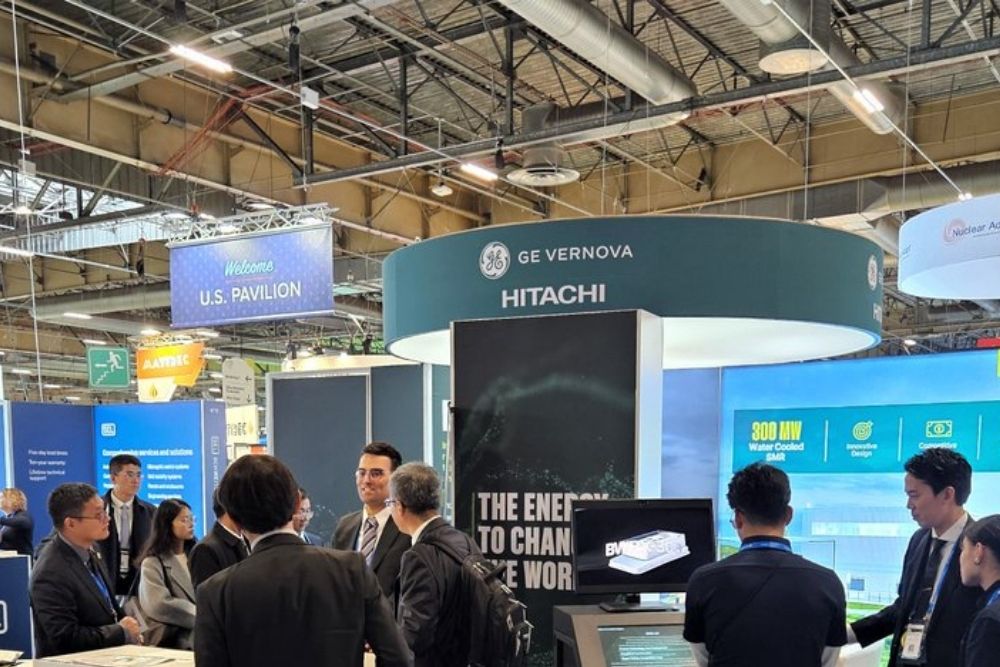
Washington is putting real money behind the idea that nuclear power can be scaled down, standardized and rolled out fast enough to keep up with a suddenly power-hungry U.S. economy. The Department of Energy has committed up to $800 million in cost-shared support for small modular reactors (SMRs), split between the Tennessee Valley Authority (TVA) and Holtec.
TVA will get as much as $400 million to push ahead with GE Vernova-Hitachi’s BWRX-300 design at its Clinch River site in Tennessee and related projects. Holtec will receive up to another $400 million to develop two SMRs at its Palisades site in Michigan, where the company is also trying to restart an 800-megawatt conventional reactor that was shut down in 2022 after more than half a century of operation.

Carbon offset body approves major carbon credit programs to boost market credibility
The Integrity Council for Voluntary Carbon Markets (ICVCM) has taken a significant step forward in raising standards in the carbon offset market by granting initial approval to five of the world’s largest carbon credit programs. This move is crucial as major buyers like Microsoft, Salesforce, and Amazon increasingly…

U.S. export curbs on China now ensnare South Korea’s chip giants
The Trump administration’s latest move against South Korea’s leading chipmakers signals a sharpening of Washington’s attempt to choke off China’s access to advanced semiconductor production, even at the expense of close allies.
By revoking long-standing waivers that allowed Samsung Electronics and SK Hynix to ship U.S.-origin chipmaking equipment to their vast facilities in China, the Commerce Department has effectively closed a loophole that had kept Beijing’s semiconductor ecosystem afloat while protecting Korean companies’ commercial interests.